|
1
|
- Carmen Shafer, CSP, CHST
- Grunley-Walsh, LLC
|
|
2
|
|
|
3
|
- Uses water to wet the surrounding areas, preventing conflagration and
allowing occupants necessary time to escape
- Designed to control or suppress but not necessarily extinguish fires
- Results in large amounts of water and smoke damage
|
|
4
|
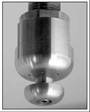
- Uses a pump or compressed gas to force water through small orifices
creating a smaller droplet size
- Tends to be very successful at extinguishing incipient fires
- High Pressure (Class I) system developed in Finland by Marioff
Corporation
- Originally designed for shipboard use – to control engine fires
- Use has expanded to other industries and areas of use
|
|
5
|
|
|
6
|
- Extinguishes Fire by:
- Cooling/Heat Absorption
- Radiant Heat Blocking
- Oxygen Depletion/Local Inerting
|
|
7
|
- In vaporization, water can absorb over 2MJ/kg – superior to any other
suppression material on the market (Marioff)
- Heat energy from gases and vapors are removed quickly in this process
|
|
8
|
- As the mist expands, it creates a cool “wall” that blocks radiant heat
and prevents general conflagration
- Mist “wall” also creates a cooler environment, allowing fire fighting
personnel to come closer to the source of the fire with less danger
|
|
9
|
- Vaporization of the water mist locally inerts the atmosphere as the
volume of the water expands over 1700 times (Marioff)
- Mist from the system penetrates the fire and locally inerts this area
|
|
10
|
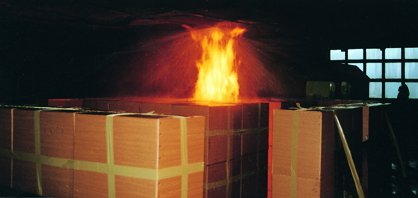
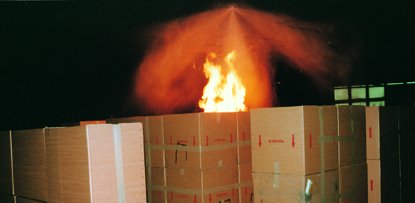
- Suppresses the fire quickly and effectively
- Uses 70% to 90% less water than sprinkler
- Little or no water damage
- Less smoke damage – system can be combined with scrubbers to eliminate
or greatly reduce smoke particles
- Is not harmful to life or the environment
- Uses less material in construction
- Can improve aesthetics – smaller pipes, smaller heads placed farther
apart
|
|
11
|
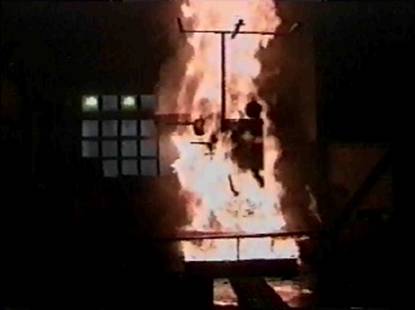
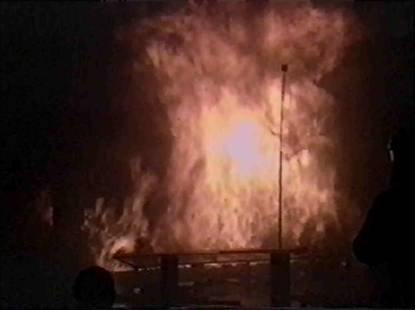
- Test fires extinguished with 1-5 gallons of water
- Many test fires suppressed in less than a minute
- Fire scenario tests extinguished in 5 minutes.
- (Artim)
|
|
12
|
- Requires more engineering and design time and resources than traditional
systems
- As this is not a common system in the US at this point; regulations,
certification requirements, etc. take a lot of time and effort.
- Installation requires high skill level
- More expensive than a sprinkler system (see above)
- More expensive in small applications than clean agents
- Some sources say it will not work in certain applications (other sources
disagree)
|
|
13
|
|
|
14
|
- Depends on Application
- Can use domestic water, sea water or water in tanks and canisters
- Can use compressed gas mixed at the source (single pipe) or at the head
(dual pipe) or use a pump
- Wet or dry pipe applications
- Pipe diameter ranges from ½ to 1 ½ inches in diameter (2/3
of the piping is ½”)
|
|
15
|
- Water supply shall be taken from a source equivalent in quality to a
potable source with respect to particulate and dissolved solids, or from
a source of natural seawater
- To minimize corrosion, all piping shall be stainless steel or copper
|
|
16
|
- Low pressure, twin fluid, gas driven (Securiplex)
- Intermediate pressure, single fluid, gas driven (Chemetron, Fike)
- High pressure, single fluid, gas driven (Marioff, Fogtec, others ...)
- High or Low pressure, single fluid, pumped (Marioff, Fogtec, UniFog,
Aquamist, … )
- Decaying pressure, hybrid gas-water (Marioff)
- Cycled discharge VS continuous discharge (Securiplex, Fike, Chemetron,
others … )
|
|
17
|
|
|
18
|
- Shipboard Applications
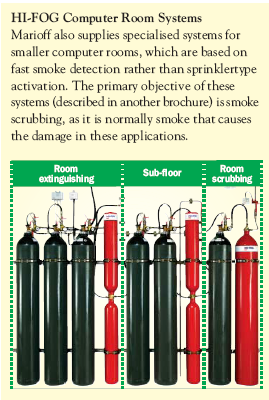
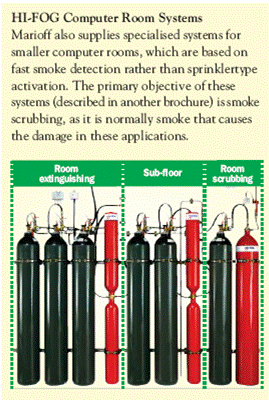
- IT Rooms
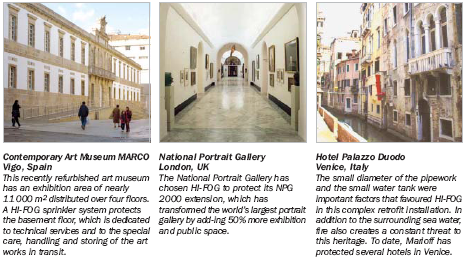
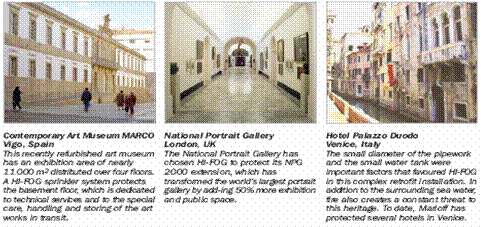
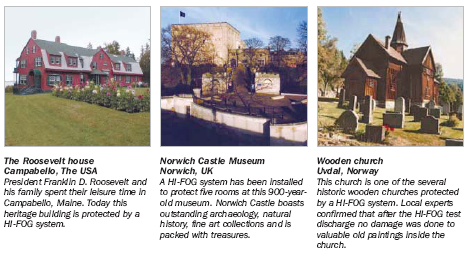
- Historical Buildings & Museums
- Hotels and Residential Construction
- Train Tunnels, Parking Garages, etc.
|
|
19
|
|
|
20
|
|
|
21
|
- Viable alternative to CO2 and Halon
- Problem of smoke damage is controlled or eliminated by the scrubbing
system – Also reduces HCl concentrations by dilution
- High pressure water mist system can activate immediately, CO2
may take up to 20 minutes to activate. (ORR)
- Research shows that nozzles are best situated inside the system and in
the sub-floor rather than at the ceiling
|
|
22
|
|
|
23
|
|
|
24
|
- National Gallery of Art West Building Renovations (HSMM/HAI)
- High Pressure (1,600 psig) water mist system used in moderate to high
fire load areas in combination with air washers
- Motorized smoke dampers located above artwork exhaust smoke from the
galleries
- HVAC system uses air cleaners to maintain humidity and remove harmful
particles from the air
|
|
25
|
- Marriott Hotels using Class I water mist systems for general fire
protection
- In Great Britain, water mist systems are used in condos and other
residences
- Water Mist systems widely used in Canada, Great Britain and Europe.
|
|
26
|
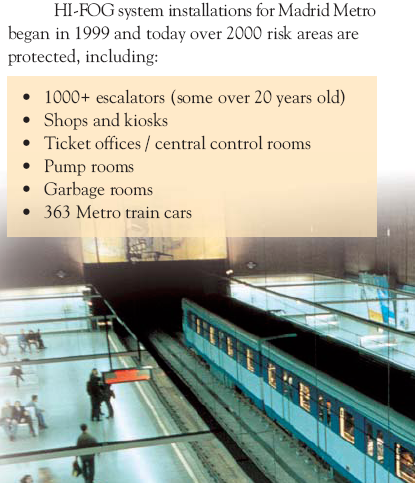
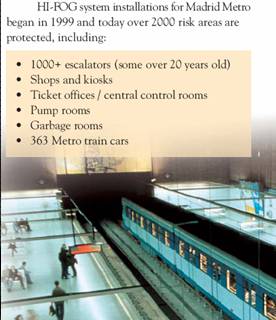
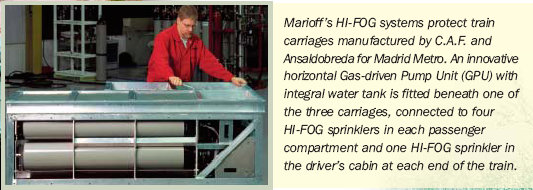
- Metro Tunnels in Madrid, Spain (Marioff) and Budapest (Fogtec)
- Parking Garages
- Airplanes (being studied)
|
|
27
|
|
|
28
|
- CONSTRUCTION INNOVATION
- Volume 4, Number 3, Spring/Summer 1999
- “Water-mist fire-suppression systems offer excellent protection for
commercial cooking areas”
- “Almost 50% of all accidental
fires in hotels, restaurants and fast-food outlets start in the kitchen
and the majority of these involve cooking oil or fat. These fires are
difficult to extinguish because they burn at a high temperature and
re-ignite easily. Without effective suppression, cooking-oil fires can
cause serious damage to property and loss of life.”
|
|
29
|
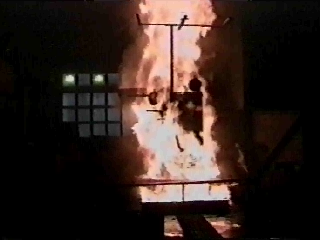
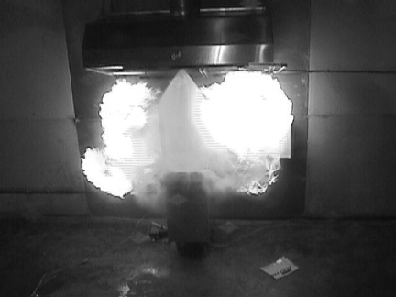
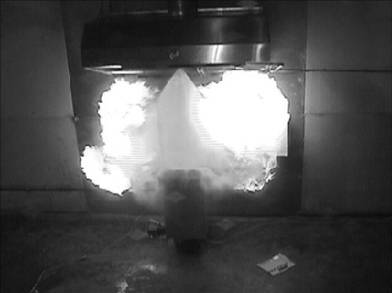
- Oil auto-ignited at 365° to 370°
- Allowed to burn for 2 minutes
- Low pressure water mist system would not suppress the fire, but the high
pressure systems were successful
- Initial flare up occurred at initiation
- When system quit shortly after suppression, the oil would reignite at
300°
- The chemical makeup of the oil changed during the free-burn and
suppression periods
|
|
30
|
|
|
31
|
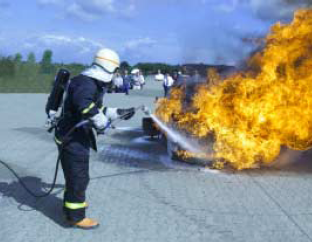
- Fogtec and Danfoss each marketing a mobile water mist fire extinguishing
system
|
|
32
|
|
|
33
|
- Artim, Nick. “An Introduction to
Automatic Fire Sprinklers, Part 1.”
WAAC Newsletter, Vol. 16, No. 3, Sept. 1994.
- Artim, Nick. “An Update on
Micromist Fire Extinguishment Systems.”
WAAC Newsletter, Vol. 17, No. 3, Sept. 1994.
- Beall, Kellie Ann ed. Thirteenth
Meeting of the UJNR Panel on Fire Research and Safety, March 13-20, 1996
Volume 2. Building and Fire
Research Laboratory, NIST.
Gaithersburg, MD.
- Building Research Establishment Ltd. (bre). “Fire Suppression in Buildings Using
Water Mist, Fog or Other Similar Systems. Project Report no. 213293v3. 2005.
- Chemtron Fire Systems Water Mist Brochure
- Coastal Fire Sprinkler Co. Ultra
Fog Water Mist Systems.
- Danfoss A/S Website/Brochure.
“Nessie High Pressure Water Mist Components for Fire Fighting.
- Fike Corporation web page http://www.fike.com
- FOGTEC web page http://www.fogtec-international.com
- Gagnon, Robert M. P.E. “Water Mist Fire Supression Systems Theory and
Application.” NAFED Website http://www.nafed.org/resources/library/wmist.cfm.
- Gardner, Thomas W and Fisher, John E. III. “Testing and Inspection Spell Success
for Life-Safety Systems. www.facilitiesnet.com.
|
|
34
|
- Gordin, Stefan. “High Speed Water
Mist Helps Minimize Damage from Fire.”
Engineer Live!, September 13, 2005.
- Liu, Dr. Zhigang. “Fire Risk
Management.” Construction
Innovation. Vol. 3, No. 2, Winter
1998.
- Liu, Dr. Zhigang. “Water-mist
Fire-suppression Systems Offer Excellent Protection for Commercial
Cooking Areas.” Construction
Innovation. Vol. 4, No. 3,
Spring/Summer 1999.
- Marioff Corporateion Oy website and brochures. http://www.hi-fog.com.
- NASA Glen Research Center. “Water
Mist Fire-suppression Experiment (Mist) Studying Fire in the Sky.” February 2002. http://www.microgravity.grc.nasa.gov/combustion/
- Nelson, Michael. “Fire
Suppression Systems in Historic Places f Worship.” http://www.sacredplaces.org. October 1998.
- “New Technologies Demonstrate Ability to Defeat Aircraft Fires.” Air Safety Week. June 26, 2000.
- NFPA 750
- ORR Protection Systems – “A Morning with the Experts Seminar Series –
NFPA and EPA Drive Sweeping Fire Code Changes!”
- de Vires, Holger Ph.D. “Mining for Answers.” Primedia Business Magazines and
Media. January 1, 2002
- Voutilainen, Heikki. “Advances in
Fire Protection of Machinery Spaces.”
March 2005. http://www.safan.com.
- Witt, Calvin L. P.E. “Timeless
Art, Timely Engineering.” May
2005.
|

 Notes
Notes