|
1
|
- Scott A. Beisler, PMP
- Navigant Consulting, Inc.
|
|
2
|
- Claims result from many issues.
- Complexity of Today’s Projects
- Poorly Defined Scope/Incomplete Contract Documents (The perfect plans
have yet to be drawn.)
- Design Changes/Additional Work
- Cash Flow (Owner and/or Contractor)
- Allocation of risk (Has there ever been an ideal contract without risk
to either party?)
- New technologies/processes/proprietary equipment
- Multiple parties – more coordination and competing interests
- Scheduling issues (Has a project
ever been built exactly as-planned?)
|
|
3
|
- Claims vary depending on the issue.
- Delay/Extended Overhead
- Acceleration
- Where there is delay, there is often acceleration.
- Disruption/Productivity Losses
- Counterclaims from Owner
|
|
4
|
- Not all delays provide entitlement.
- Excusable/Compensable
- Delays beyond the Contractor’s control
- Contractor entitled to a time extension and delay damages (O/H).
- Excusable/Non-compensable
- Delays for which neither party at fault
- Contractor entitled to time extension (i.e., LDs waived), but NOT delay
damages.
|
|
5
|
- Non-Excusable/Non-Compensable
- Caused by Contractor, e.g.
- Slow progress
- Insufficient/Inadequate manpower
- Defective work
- Subcontractor/vendor delays
|
|
6
|
- The contract establishes whether a claim can be pursued.
- Owner subject to Adjustment of Completion Date - Issue extensions if justified.
- Contractor subject to Responsibility for Completion - Get Back on
Schedule!!!
- Conflict between these competing clauses often leads to claims.
- What date are we trying to meet?
Who has delayed the project?
- Time extension - Owner grants relief to Contractor.
- Schedule recovery directive - Contractor recovers delay at its own
expense.
- Acceleration directive - Owner compensates Contractor to recover
delays.
- What if delays and responsibility are intertwined? Who pays for what?
- That’s why a good schedule is needed.
|
|
7
|
- Ownership of Float
- Other Owner responsibilities:
- Duty to cooperate with contractor (provide information, approve
submittals, respond to RFIs, inspections, etc.)
- Contractor has burden of proof.
|
|
8
|
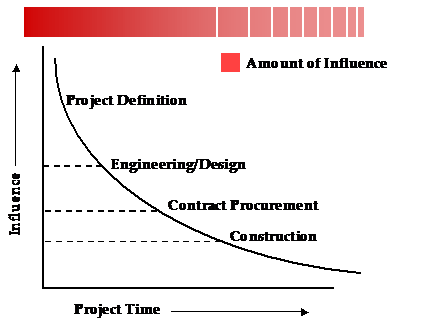
- All of the following may have an influence on the potential for claims.
- Prioritization of Owner’s Goals
- Owner Involvement
- Partnering program
- Selection of Architect, Engineer and Contractor
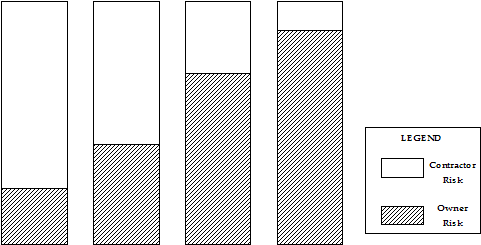
- Acceptance/Allocation of Risk
|
|
9
|
- Establish intermediate schedule milestones to ensure overall completion
date.
- Payment milestone with or without LDs.
- May increase potential for additional delay claims.
- Cash Flow
- Contingency for extra work/cost overruns
- The best way to defend a delay claim is to plan ahead and prevent them.
|
|
10
|
|
|
11
|
|
|
12
|
|
|
13
|
- Delay claims often rise or fall on the quality of the schedules.
- Uncertainty and risk are part of any schedule. Recognize that schedule
is dynamic.
- Include a detailed schedule specification in the contract.
- Requirement for CPM/software.
- Schedule reports/quantity curves.
- Level of detail.
- Manpower/quantity/cost loaded.
- Monthly narrative with progress achieved, delays incurred, outstanding
issues, critical path analysis, etc.
- Define procedure for obtaining a time extension.
|
|
14
|
- Require activities/logic that typically may affect the schedule, e.g.;
- Submittal cycles.
- Deliveries.
- Proper sequencing/construction logic.
- Area availability dates (e.g., renovation projects).
- Crew/equipment restraints.
|
|
15
|
- Establish the construction schedule baseline early in the construction
period.
- Review the schedule with the contractor and resolve potential errors.
- Share knowledge.
- Understand your commitments and plan accordingly.
- Use the schedule as a management tool, not a weapon. (Build, not battle.)
- Use float prudently.
- Revise schedule if necessary.
- Activity level should define responsibility.
|
|
16
|
- Monthly schedule review sessions.
- Insist on quality updates –actual progress and realistic to-go plan.
- Don’t let the schedule become a burden. Bigger not always better.
- Review delays, current critical path, need for extensions or recovery
plans.
- Require critical path reports to show driving activities.
- Require plots showing critical path(s) only.
- Beware of downstream resequencing of activities.
- Is the job really on schedule???
Or that far ahead/behind?
- Issue Minutes of Meeting.
|
|
17
|
- Define weather days in contract (including dry-out days).
- Recovery Schedules
- Require if contractor behind due to its delays.
- Review for credibility. Make it
more than just a scheduling exercise.
- Monitor progress and subsequent delays.
- Discuss schedule regularly at all levels of management. Obtain buy-in from key parties. Make
people schedule conscious.
- A schedule is only as good as its input and
- cannot work if not followed.
|
|
18
|
|
|
19
|
- Time extension requests should be considered and acted upon.
- Arbitrary rejection is dangerous.
Review and respond to all time extension requests.
- Require a critical path analysis that proves the [potential] impact of
the event.
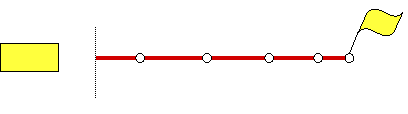
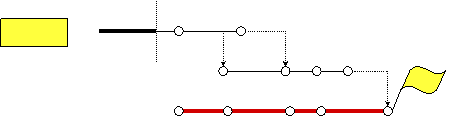
- Require a fragnet/subnet to be included in the overall project CPM.
- Check other paths, particularly prior critical path.
- Consider possible ways to mitigate the event. Is it really a delay?
- If request submitted after delay is over, require proof that event
actually affected critical path.
|
|
20
|
- Require documentation that proves causation, responsibility and duration
for the requested time extension.
- Properly define and document the time extension with a change order.
- Attempt to resolve time extensions during the project.
- Remember – if a time extension is improperly denied, the contractor may
be entitled to acceleration costs for attempts to recover [Owner]
delay(s).
- A properly executed time extension
- may prevent a larger delay claim later.
|
|
21
|
|
|
22
|
|
|
23
|
- Develop your defense as part of your daily job.
- Avoid “He said, She said” arguments after the issues become gray. Maintain an accurate project record.
The facts are your best defense.
- Respond timely to RFIs and contractor requests.
- Resolve direct cost change orders during project.
- Maintain proper documentation on potential delay issues raised by the
contractor. Respond timely to
contractor letters to establish your position.
- Sophisticated contractors now often have a “claims” engineer on site or
use its scheduler to develop claims files during the project.
- Maintain daily reports at similar level as contractor.
|
|
24
|
- Require Notice on potential claims.
Respond appropriately.
- Require regular cost/schedule reporting.
Question accuracy of data and deviations from the plan.
- Progress curves – Track key commodities.
- Manpower data – Track manpower requirements.
- Productivity reports.
- Daily/monthly reports.
- Schedule updates.
- Obtain legal counsel as needed.
|
|
25
|
|
|
26
|
|
|
27
|
- The project is not really over until the claims are resolved.
- Should a delay claim develop that wasn’t resolved during the project, be
prepared to defend it.
- “We’ll resolve this at the end of the job” attitude.
- Maintain the project documents.
- Continue to research claims and supplement issue files.
- Involve the proper personnel from the project.
- Owner personnel active during the project.
- Architect/Engineer/CM as appropriate.
- Assist with the delay analysis as needed and possible.
|
|
28
|
- Review the claims vigorously; require the Contractor to meet its burden
of proof.
- Pursue counterclaims if appropriate.
|
|
29
|
- CPM analysis and detailed fact-finding required.
- Courts and Boards have endorsed the use of CPM.
- Different approaches may yield different answers.
- Circumstances often dictate what approach to use, such as:
- The contractor did not prepare a schedule or used limited schedules.
- Schedules used for progress payments only; schedule accuracy
unreliable.
- Contract defines the method to be used.
- Issues and type of claims put forth by the contractor.
|
|
30
|
- Methods
- Fragnet Approach
- Time Impact Analysis
- Collapsed As-Built Schedule (“But For”)
- As-Planned v. As-Built Analysis
- As-Built Critical Path
- Regardless of approach used, the underlying (claimed) causes for the
delay should be thoroughly reviewed along with the contractual basis for
making the claim.
- Reasonable check - does the claim make sense? Resolve it!
|
|
31
|
- The available methods vary in difficulty, time, expense and risk.
- The longer the dispute is unsettled, the more contentious it becomes.
|
|
32
|
|

 Notes
Notes