|
1
|
|
|
2
|
- Eighty five percent (85%) of all claims involve project delay.
- During my thirty two years in construction, which includes fifteen years
of consulting with claims, I have rarely seen a claim that is not based
on delay as the fundamental entitlement.
|
|
3
|
- Plans and Specifications.
- Construction Management.
- Project Managers.
- CPM Schedules.
|
|
4
|
|
|
5
|
- Accurately analyzing and quantifying
the amount of time specified in a delay claim.
- Controlling a project and preventing delay claims.
|
|
6
|
- CPM Scheduling clearly communicates the time management planning for the
project.
- CPM Scheduling clearly communicates the construction means and methods
planning for the project.
|
|
7
|
|
|
8
|
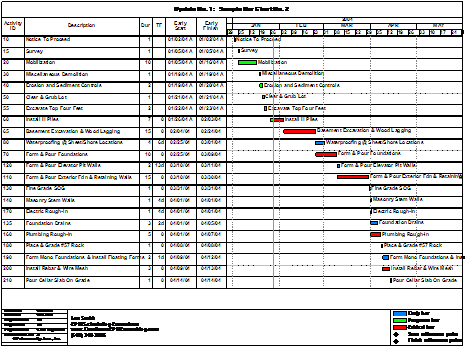
- First, you need to treat CPM Scheduling as a sophisticated endeavor.
- Second, you need to properly “vet” your CPM scheduling personnel.
- Third, you need to use CPM scheduling for the building process.
- Fourth, you need to avoid endorsing actions which treat CPM solely as a
claims tool.
|
|
9
|
- CPM is the #1 time management tool available to the construction
industry.
- CPM is a network logic based system.
- CPM is a method that identifies the project critical path and the total
float available to activities that are not critical.
|
|
10
|
- CPM Scheduling was introduced in the 1970’s as a way to control
projects.
- CPM Scheduling programs were adapted to the personal computer in the
1980’s.
- CPM Consultants became widely available in the 1980’s and 1990’s.
- CPM Scheduling has been adopted by the court systems as the “De Facto”
standard for proving delay claims.
- The unprecedented growth of CPM experts and construction lawyers in the
late 1980’s and throughout the 1990’s.
- The introduction of Windows based “user friendly” scheduling programs in
the 1990’s.
|
|
11
|
- What is the state of CPM Scheduling after 34 years of use?
- There is a debate about why the success rate of CPM Scheduling is low.
- The May 26, 2004 Engineering News Record article “Critics Can’t Find the
Logic in Many of Today’s CPM Schedules”
presents the basics of the debate that has emerged.
|
|
12
|
- Unfortunately, General
Contractors are not participating in the debate about CPM.
- The CPM Experts and Construction Attorneys are in charge of the debate.
- The General Contractors either do not know about the debate or are
ambivalent about it because they are totally focused on “the current
job”.
|
|
13
|
- The debate about CPM
Scheduling has identified two
positions:
- User friendly programs that allow errors are okay. It is the responsibility of the user
to avoid problems.
- The user friendly programs that allow errors are a large part of the
problem.
|
|
14
|
- Okay, so where do we go from here?
- Regardless of your positions regarding the debate, there is one
outstanding predominate fact about CPM:
- CPM is a logic based network analysis system! The dates for an activity early
start, late start, early finish and late finish are calculated by a
forward and backward pass through the network logic by the computer.
|
|
15
|
- Now, let us discuss the solution:
- The basis of the solution is to treat CPM Scheduling as a sophisticated
endeavor.
- You will need to do your homework and get it right.
- CPM is a logic based system.
- Any other way of looking at it will not work.
|
|
16
|
- The starting point for the solution is in the approval of the Project
Baseline CPM Schedule.
- You cannot analyze a delay claim or prevent a delay claim if your
project has a faulty Baseline CPM Schedule.
- It has been my experience that a very high percentage of Project
Baseline Schedules are deficient and should not be used as the basis for
delay claims.
|
|
17
|
- The most important first step is to start using logic diagrams as the
primary means for approving the Project Baseline CPM Schedule.
- When you base your approval on a bar chart, you have no idea as to the
basis of the logic.
- A bar chart does not communicate the construction logic and
planning. Only the developer of
the bar chart knows the basis of the bar chart schedule planning .
|
|
18
|
- What do most of you use as the communication tool for your Baseline
Schedule Approval?
- The answer probably is Bar Charts!
|
|
19
|
- We are now going to review two CPM Schedules for the same project.
- The project is in downtown Washington, D.C.
- The site footprint is very small and there are adjoining building
issues.
- It is a five story structure.
- We are going to look at the foundation portion of the schedule which has
22 activities. Overall, the
schedule has 422 activities.
- The Contractor has one year to complete construction.
|
|
20
|
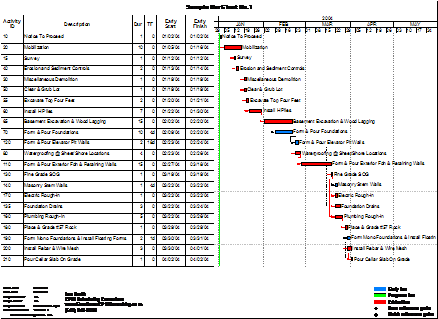
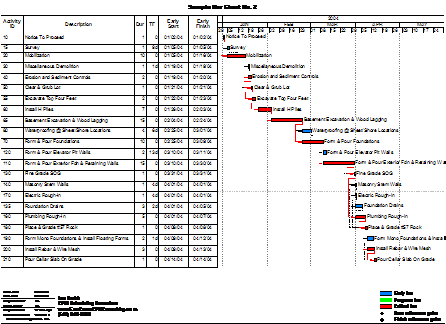
- I am going to show you two Baseline Schedule Bar Charts.
- Which one is based on correct
logic?
- Which one do you like?
|
|
21
|
- Sample Baseline Schedule No. 1:
|
|
22
|
- Sample Baseline Schedule No. 2:
|
|
23
|
- What is the difference between the two baseline schedules?
|
|
24
|
- The difference is that one baseline schedule contains a false critical
path and does not meet CPM specifications.
- The faulty baseline schedule may actually cause a claim to happen.
|
|
25
|
- How do you determine which Baseline Schedule should be approved?
- 1. Review the schedule report.
- 2. Review the CPM logic.
|
|
26
|
- First, we will look at the project schedule report for each baseline
schedule.
|
|
27
|
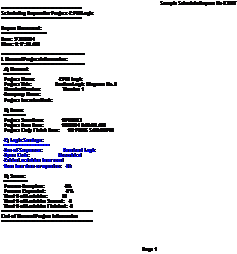
- Baseline No. 1 Schedule Report:
Page 1
|
|
28
|
- Baseline No. 1 Schedule Report:
Page 1
|
|
29
|
- Baseline No. 1 Schedule Report:
Page 2
|
|
30
|
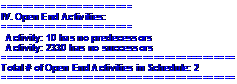
- Baseline No. 1 Schedule Report:
Page 2
|
|
31
|
- Baseline No. 2 Schedule Report:
Page 1
|
|
32
|
- Baseline No. 2 Schedule Report:
Page 1
|
|
33
|
- Baseline No. 2 Schedule Report:
Page 2
|
|
34
|
- Baseline No. 2 Schedule Report:
Page 2
|
|
35
|
- Next, we will review logic diagrams for each baseline schedule.
|
|
36
|
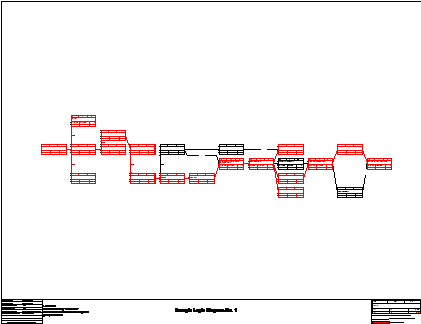
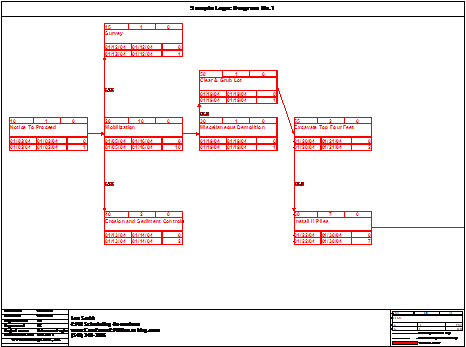
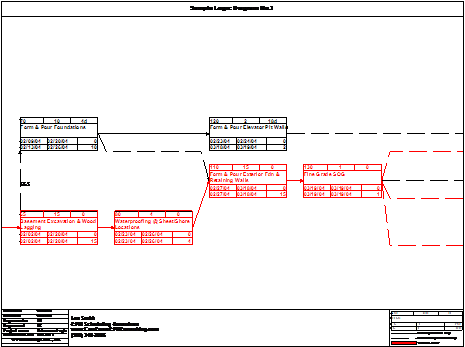
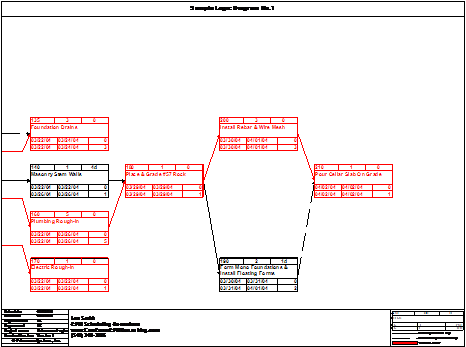
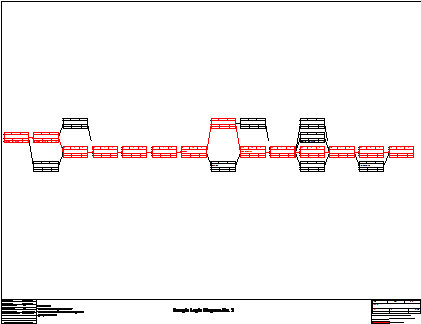
- Sample Baseline Logic Diagram No. 1:
|
|
37
|
|
|
38
|
|
|
39
|
|
|
40
|
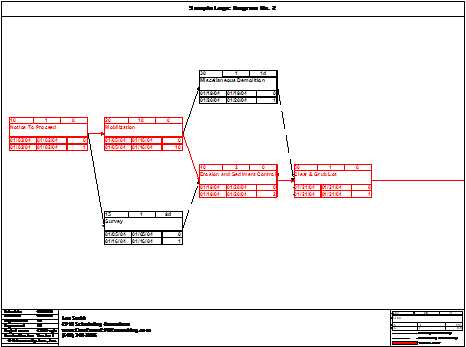
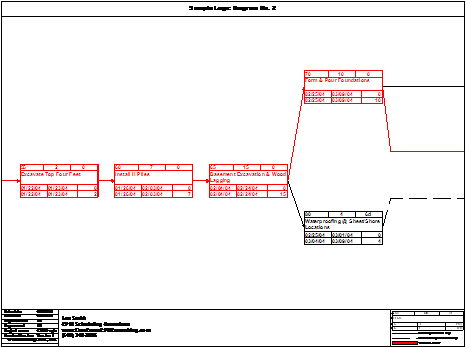
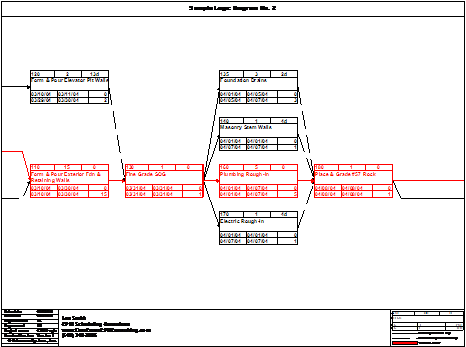
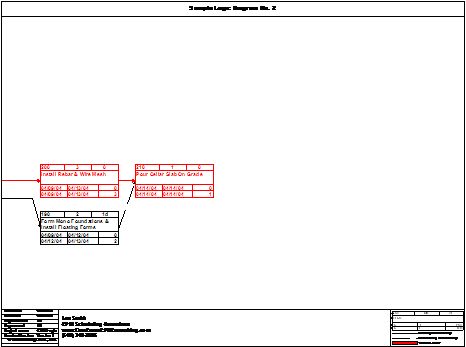
- Sample Baseline Logic Diagram No. 2:
|
|
41
|
|
|
42
|
|
|
43
|
|
|
44
|
|
|
45
|
- Our baseline schedule review is complete and you should be able to
approve the proper schedule for your project.
- But unfortunately, the approval battle may have totally missed the CPM
issues.
- Lets look at what happens when you update either of these two schedules
after one month on the job.
|
|
46
|
- The project NTP was issued January 2, 2004 as planned.
- The Contractor updated the baseline schedule at the end of the first
month.
- Both of our previous schedule examples have been updated with identical
progress and dates.
- The results are far from identical.
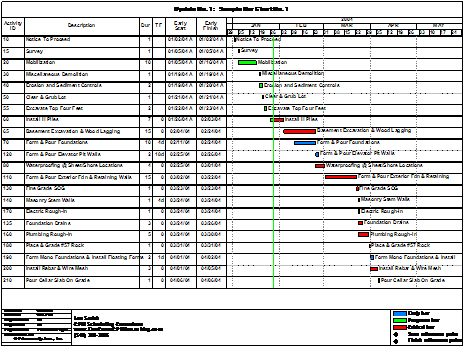
- The following Update No. 1 Bar Charts show the different results that
came from the identical data:
|
|
47
|
|
|
48
|
|
|
49
|
- Baseline CPM Schedule No. 1 Activity No. 210 Pour Cellar Slab On Grade
finish date was extended from 4/2/04 to 4/6/04.
- Baseline CPM Schedule No. 2 Activity No. 210 Pour Cellar Slab On Grade
finish date is on time for 4/14/04.
- The Contractor with the faulty baseline schedule is claiming a critical
path delay of four (4) calendar days.
- The delay claim entitlement is based on the Owner’s failure to obtain
the building permit in a timely manner.
- The failure to obtain the permit delayed the project critical path
Activities #40 Erosion &
Sediment Controls, #30 Miscellaneous Demolition, #50 Clear & Grub
Lot, #55 Excavate Top Four Feet and #60 Install H Piles.
|
|
50
|
- And so the process starts.
- The Owner denies the claimed time extension and associated costs.
- The Contractor hires a Construction Attorney.
- The Construction Attorney recommends a CPM Expert to the Contractor.
- The Contractor hires the CPM Expert.
- The CPM Expert prepares a “Windows Critical Path Analysis” or a
“Collapsed As-built Analysis”; both of which prove that the Owner is
responsible for the delay.
- The Owner rejects the Contractor’s Expert prepared claim.
- The Contractor begins the litigation process.
|
|
51
|
- The odd thing is that no one, including the expert, will ever be able to
go back to the original Baseline CPM Schedule and correct the logic
problems that led to the claim.
- The argument now will be whose expert do you believe?
- The right approach could have eliminated the claim.
- The right approach would have been to invest the time during the approval process
to review and discuss the baseline logic.
- The Owner and the Contractor must not miss the opportunity to reach an
agreement on scheduling early on before the problems occur.
|

 Notes
Notes